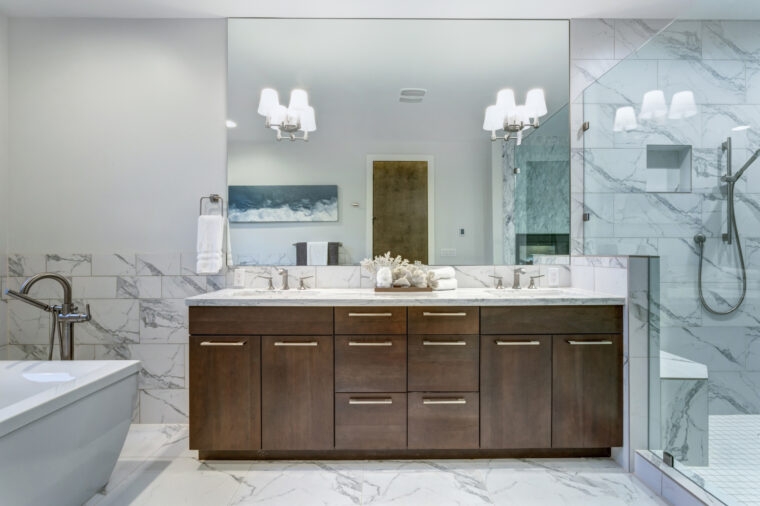
Bathroom vanities take more abuse than almost any other cabinet in the home. Between humidity, temperature swings, splashes, and frequent cleaning, choosing the right finish is critical for long-term performance and appearance. One of the most common questions homeowners ask is: Should I paint or stain my bathroom cabinets? Let’s break it down — and show you the best way to refinish them using ZAR® Wood Stain and ZAR® Polyurethanes.
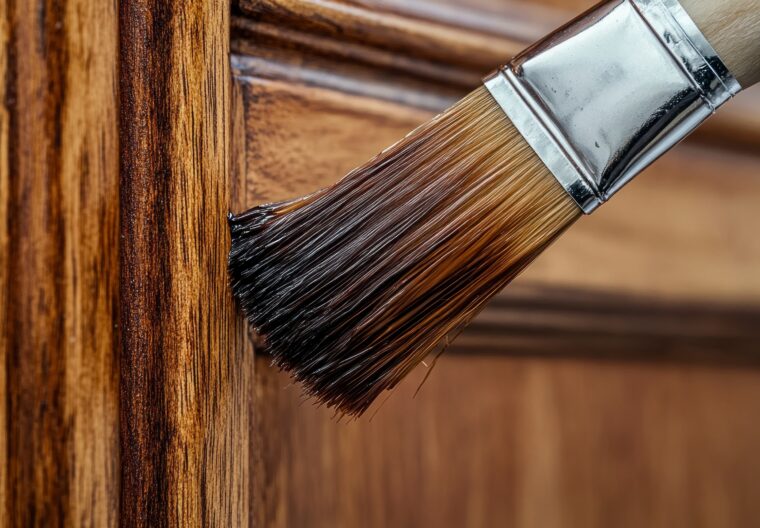
Paint or Stain: Which Is Better for Bathroom Cabinets?
Painting bathroom cabinets can provide a clean, modern look, but painted finishes are more prone to:
- Chipping and peeling in high-humidity environments
- Visible wear around handles and edges
- Moisture intrusion if the film is compromised
Staining, on the other hand, enhances the natural beauty of the wood while allowing it to breathe. When paired with a high-quality protective topcoat, a stained vanity offers:
- Better moisture tolerance
- Easier touch-ups over time
- A richer, more durable finish
Bottom line: If your vanity is wood or wood-veneered, staining with ZAR® Wood Stain and sealing with ZAR® Polyurethane is often the best long-term solution for bathrooms.
What Is the Best Finish for Bathroom Vanities?
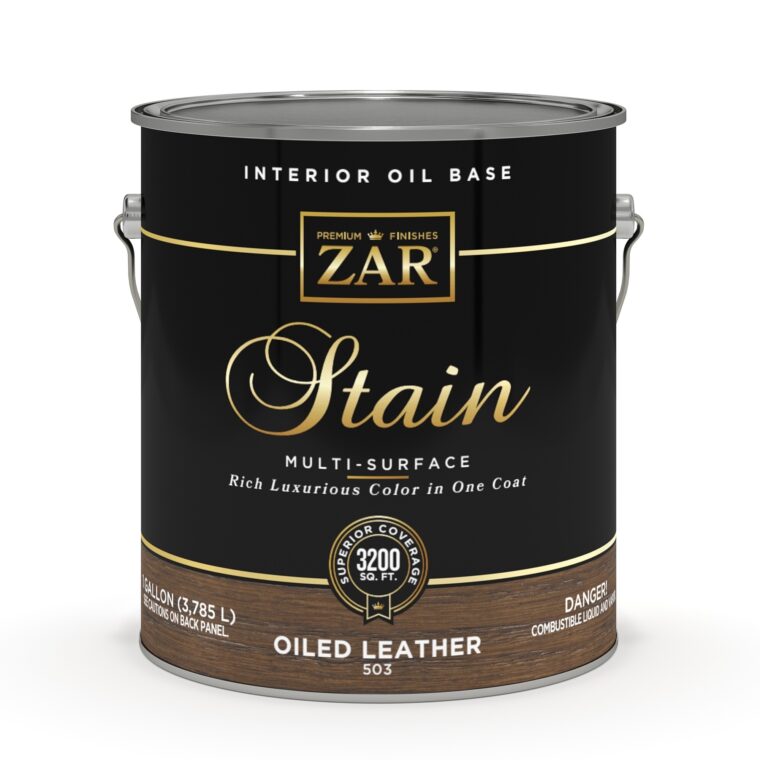
For durability and moisture resistance, a two-step system works best:
- ZAR® Interior Wood Stain
- Deep, even color
- Excellent adhesion
- Works on new, previously finished, or even painted surfaces (when properly cleaned)
- Provides a tough, water-resistant protective film
- Ideal for humid environments like bathrooms
- Available in multiple sheens to match your design style
This combination delivers both aesthetic appeal and long-term protection.
Do You Need to Sand a Vanity Before Using ZAR® Wood Stain?
Not always.
ZAR® Wood Stain is known for its superior adhesion.
- If your vanity is light-toned wood or previously painted, and
- The surface is thoroughly cleaned of dirt, grease, soap residue, and other contaminants
👉 You can apply ZAR® Wood Stain directly without sanding.
Sanding may still be recommended if:
- The surface is glossy or heavily sealed
- There is peeling, flaking, or uneven buildup
- You need to smooth out physical damage
Best Way to Refinish Bathroom Cabinets (Step-by-Step)
Refinishing a bathroom vanity properly doesn’t have to be complicated.
✔ Bathroom Vanity Refinishing Checklist
☐ Remove doors, drawers, and hardware
☐ Clean all surfaces thoroughly (remove oils, soaps, waxes, and residue)
☐ Lightly scuff sand only if needed (optional for many ZAR applications)
☐ Apply ZAR® Wood Stain with a brush or cloth
☐ Wipe excess stain and allow to dry per label directions
☐ Apply ZAR® Polyurethane for moisture protection
☐ Allow proper dry and cure time before reinstalling hardware
Final Thoughts
Bathrooms demand finishes that can stand up to moisture without sacrificing beauty. While paint has its place, a stained and sealed vanity using ZAR® products delivers superior durability, easier maintenance, and timeless appeal. With proper cleaning and the exceptional adhesion of ZAR® Wood Stain, refinishing can be simpler than you think — often without sanding at all.